Progress Status of the entrepreneurship program
In our journey to empowering youth communities to gain full potential for individual and societal transformation, Jolt youth initiative, through its entrepreneurship program, Project Sente, envisions it to be a catalyst for innovation, job creation, labor force development and inclusive economic mobility.
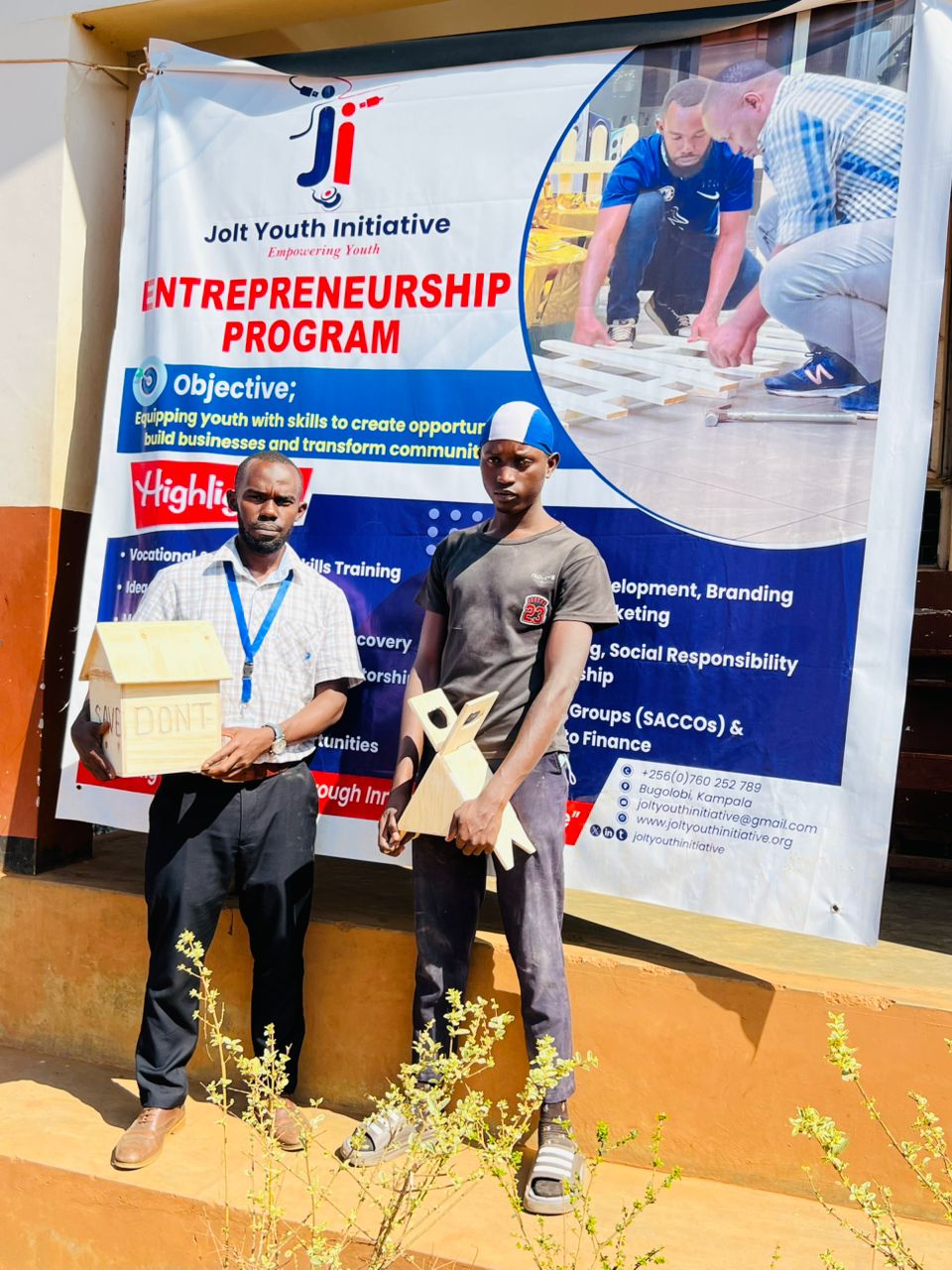
The objectives of the program focus to develop competency in entrepreneurial skills among the school and non-school going youths with a structured mentorship in financial literacy, business planning and management. Last year in September, the program launched an intensive training in financial literacy, business planning and management, coupled with a hands on skilling program in wood work fabrication and decoration/events management at Wamatovu Muslim secondary school, Nakirebe-Masaka rd. At the end of the program, an incubation cohort of 26 trainees emerged and these were integrated to form 5 groups, which translated into social business enterprises that will provide production of wood products and providing decoration and events management services in the communities.
How Jolt Youth Initiative Turned a Challenge to a farming opportunity
When international funding started dwindling, Jolt Youth Initiative (JYI) faced a big challenge. We had to think carefully about how to keep our work going and remain strong. Instead of giving up, we chose a new path,farming. Farming would not only help us generate income and support our programs, but it would also create opportunities for young people in our community.
In March 2025, JYI rented one acre of land in Busomba Village, Mpigi District, marking our first step into agriculture. We engaged young people from the village to till the land, paying them for their work while also giving them a chance to learn practical farming skills. This approach ensured that both JYI and the community benefitted from the project. We planted maize (DK 8031 variety) and cassava using hoes and other simple tools, applied fertilizer, and controlled weeds through both manual and chemical methods.
As expected, farming came with challenges. Termites, squirrels, and rodents destroyed some seedlings, but we managed by replanting and also adding cassava cuttings at the margins of the farm. By early August, the maize was ready for harvest. On August 9th, our program coordinator, two staff members, and a group of young people worked together to bring in the yield.
The maize is now drying under controlled conditions to prevent spoilage before it can be sold in local markets Although this first cycle did not yield a profit, we operated at a total loss, we gained valuable lessons that will guide us in improving future harvests. Importantly, the effort demonstrated that farming can provide food for the community while offering youth employment and learning opportunities. Meanwhile, the cassava we planted is still growing and is expected to be ready in three months. Known for its resilience and ability to thrive in different conditions, cassava is a reliable crop that fits perfectly into our long-term sustainability plans. As we reflect on this journey, we see more than just a farm. It is a story of resilience, learning, and community empowerment. We want to expand this initiative by involving more young people, partners, and supporters. Together, we can grow more food, create jobs, and build a stronger community. At JYI, unlocking potentials
Unlocking Youth Potential Through Skills and Entrepreneurship
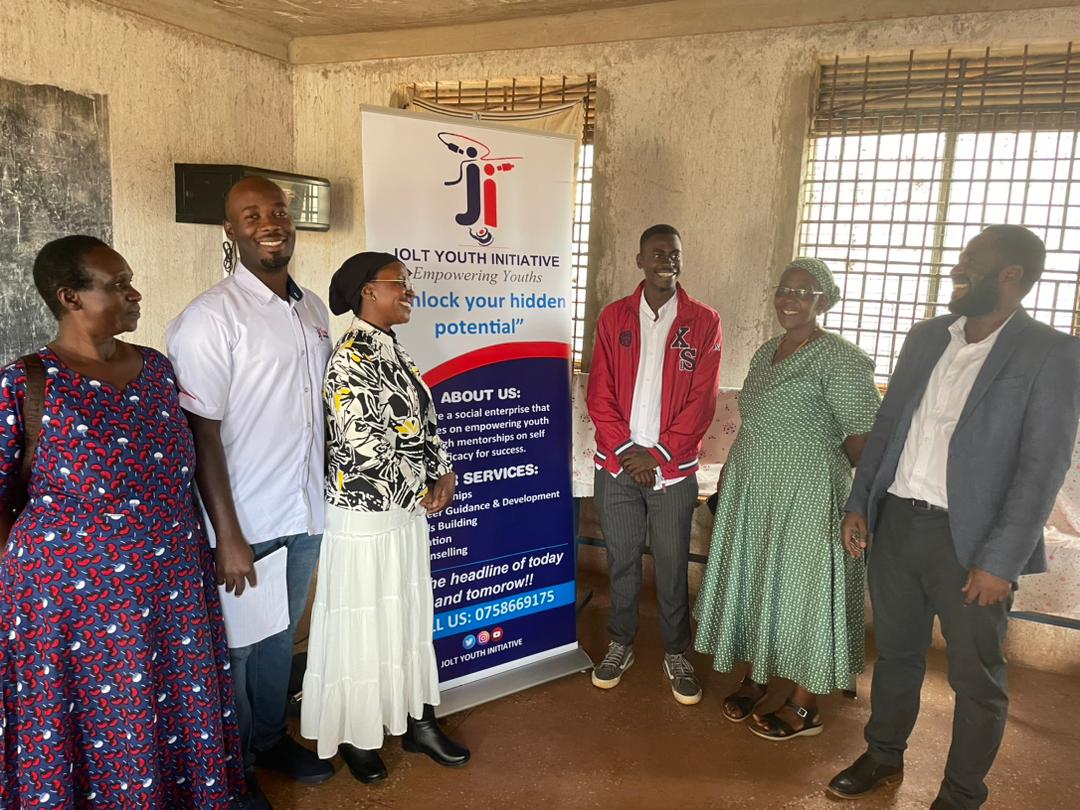
For over two years, Jolt Youth Initiative (JYI) has been helping school-going youth in Mpigi District unlock their self-efficacy for individual and community development. Through programs in education, health, peace and conflict resolution, and entrepreneurship, JYI continues to brighten the future of young people.
On 25th August 2025, JYI launched the Project Sente skilling program at Wamatovu Muslim Secondary School in Nakirebe. Over two weeks, ending on 5th September 2025, 26 students from S.2 to S.6 completed a Financial and Skills Training Program that combined entrepreneurship and financial literacy. with hands-on training in woodwork fabrication and event decoration. The sessions introduced students to entrepreneurship fundamentals, financial management, savings, and business planning, while practical workshops gave them exposure to modern machines and creative design techniques. The training produced exciting outcomes: 12 students trained in woodwork, 13 in event decoration, and 25 received certificates after the training. Five social entrepreneurship businesses were also formed, each with elected leaders, and they now envision building a youth-led events management enterprise. Tropical Bank pledged to open junior savings accounts for eligible trainees, ensuring financial inclusion at a young age. Our appreciation goes to the district education department, the school administration. Special appreciation to our Trainers including Carol Mary Amase, Semamabo Sharman Creatives and Mr. Tamukedde Derrick, for their vital role in delivering both theory and practical sessions. Looking ahead, JYI plans to establish a central hub as a workshop where these cohorts can continue training, grow enterprises, and access job opportunities a sustainable center for turning youth potential into real economic mobility.